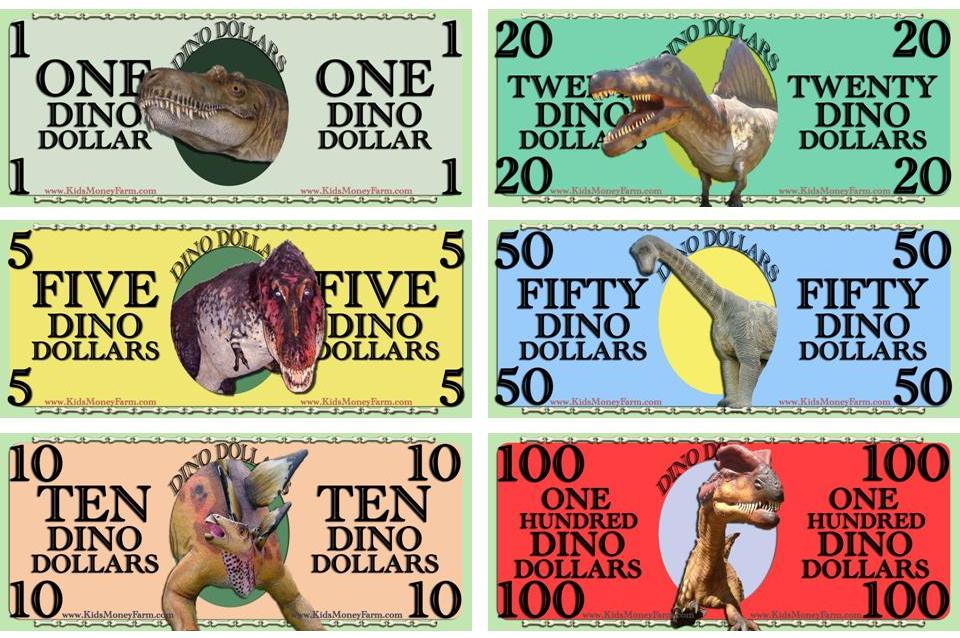
Dino Dollars
Dinosaur play money in $1 to $100. Color and black-and-white versions.
A classroom economy lets students earn, save and spend class money. It builds money skills and makes classroom management easier. Here is a simple setup you can start this week.
Choose one play money set and stick with it all year. Dino Dollars and Puppy Money are popular with K-3. Older grades often prefer dollar-style bills. Print on cardstock and laminate if you can.
Keep fines rare and small. Many teachers charge "rent" for desks once a month, which teaches budgeting. Lost supplies or a forgotten folder can cost a dollar.
Once a week or once a month, open a store. Rewards do not have to cost you money:
Put a few high-priced items in the store that take weeks to afford. Students who save learn the payoff. Add a class "bank" that pays a small interest bonus on savings left untouched for a month.
Older students can track their balance with our check register worksheet, and teens can try the budget spreadsheet.
| Item | Price |
|---|---|
| Sticker or pencil | $5 |
| Choose a class game | $20 |
| Sit at teacher's desk | $50 |
| Homework pass | $75 |
| Lunch with the teacher | $100 |
Any grade from kindergarten up. Keep it to earning and spending for K-1, and add rent, savings and interest for grades 3 and up.
Use a set that is hard to copy in your room (cardstock in one color), stamp the back with a classroom stamp, and give each student an envelope or wallet.
Dinosaur play money in $1 to $100. Color and black-and-white versions.
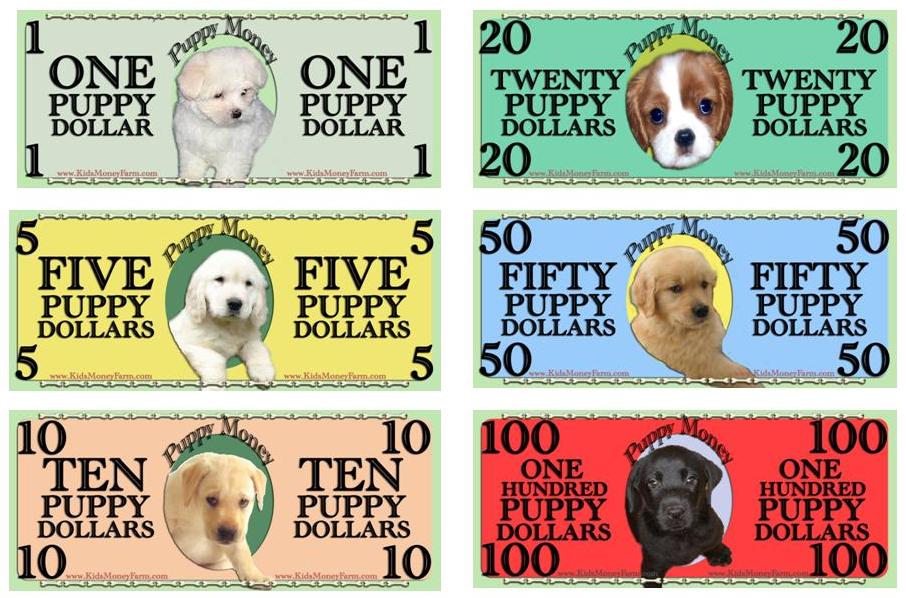
Cute puppy bills kids love. Full sheets and single bills, $1 to $100.
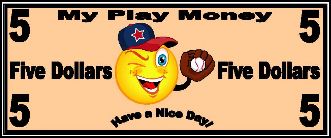
Simple, bright smiley bills for preschool and early math, up to $1,000.
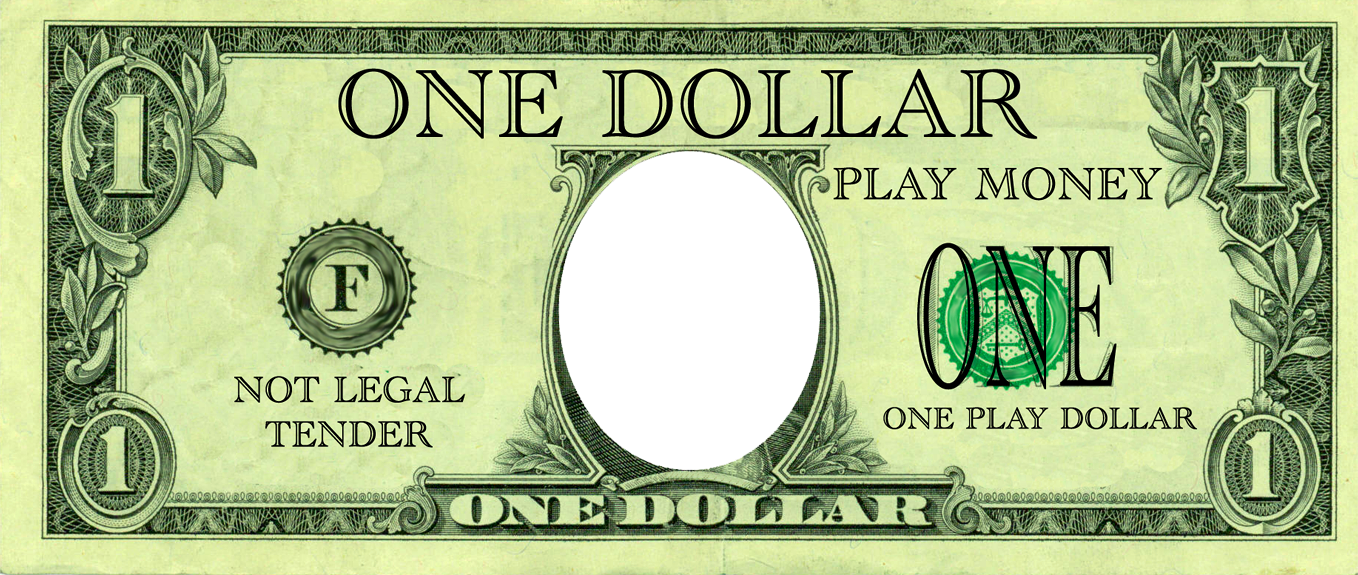
Blank-face bills you can personalize with your child's photo in Word or PowerPoint.